
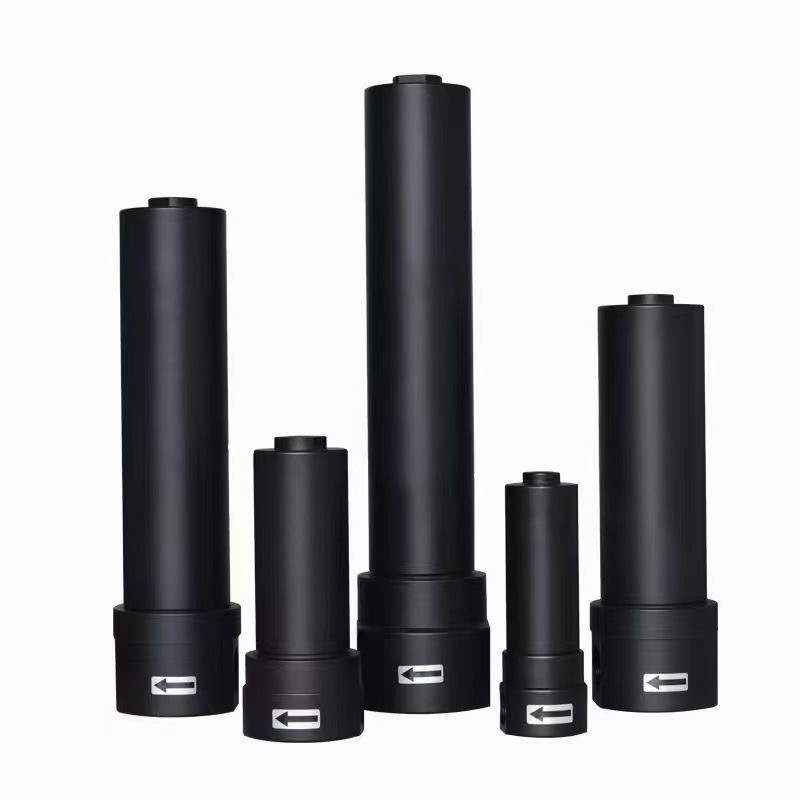
How Precision Filters Work
Precision filters use three primary mechanisms to remove contaminants:
Coalescence – removes liquid aerosols (oil and water droplets). As air passes through fine fibrous media, tiny droplets collide and merge into larger droplets that gravity pulls to the bottom for drainage.
Adsorption – removes oil vapors and odors using activated carbon media, which attracts and holds hydrocarbon molecules on its porous surface.
Depth/Surface Filtration – Removes solid particles through a physical barrier, trapping dust, rust, and pipe scale.
Precision filters are critical components in compressed air systems, designed to deliver high-quality, contaminant-free air by removing oil mist, liquid water, dust, and solid particles generated during the compression cycle. When contaminated air enters the filtration chamber, the internal structure forces contaminants to collide within the filter media — solid particles are intercepted immediately, while microscopic oil and water droplets coalesce into larger forms and settle at the bottom of the housing for automatic or manual drainage.